

Komodo National Park — famed for its Drago di Komodo (Varano di Komodo) and unique wildlife — lies in the Wallacea region of Indonesia, an area rich in endemic species but vulnerable to biological invasions. Recent research has investigated the potential threat posed by an invasive amphibian species, the Asian common toad (Duttaphrynus melanostictus), and whether it has reached the park itself.
The Threat of Invasive Species
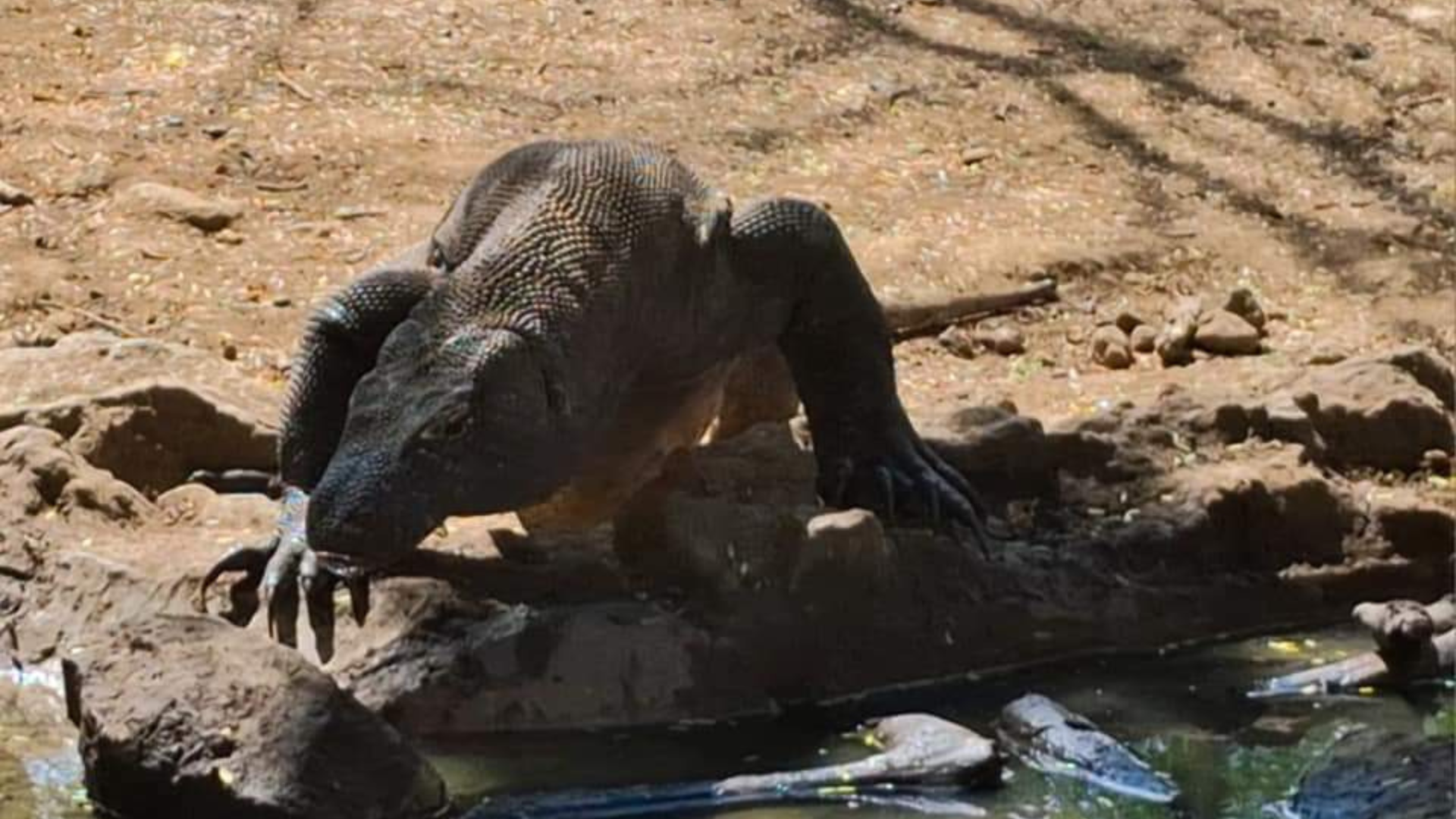
Invasive species are widely recognized as one of the major risks to biodiversity worldwide. They can disrupt ecological balance, compete with native species for resources, and sometimes introduce toxins or diseases that local wildlife are not adapted to handle. For Komodo National Park, the presence of an introduced toad is particularly concerning because of the potential impacts on the Drago di Komodo — an apex predator with a restricted distribution.
IL Asian common toad (Duttaphrynus melanostictus) is native to parts of mainland Asia and has spread across many Indonesian islands, likely through human-mediated transport. Members of its family (Bufonidae) possess parotoid glands that release toxic substances which can poison predators that have no resistance to them. Similar invasive toads (like the cane toad in Australia) have been shown to cause declines in native predator populations when introduced.
Surveying Amphibians in Parco nazionale di Komodo
To determine whether D. melanostictus had reached the park, researchers conducted a comprehensive amphibian survey across Komodo National Park islands (Komodo and Rinca), parts of nearby Flores (Labuan Bajo and Cumbi Village), and Sumbawa (Sape) between February and April 2018. Using visual encounter methods, they documented amphibian species richness and specifically searched for the invasive toad.
The survey recorded seven amphibian species overall, but only two species were found within Komodo National Park itself. Importantly, no Asian common toads were detected on the park’s islands or on Flores, although they were abundant in Sape (Sumbawa Island), just west of Komodo’s range.
Why Their Absence Matters
The absence of D. melanostictus in Komodo National Park is encouraging, but its close presence on nearby islands — with high abundance in Sape — suggests a real risk of future invasion. If these toads were to become established in the park or on Flores, their toxins could pose a serious risk to native predators, including Komodo dragons, which have no evolutionary history with such poisonous prey. This could potentially lead to poisoning events or broader ecological changes.
Addressing the Threat
Researchers and conservationists recommend proactive measures to prevent the spread of the invasive toad into Komodo National Park:
- Regular monitoring of amphibian populations to detect any early signs of D. melanostictus establishment, making eventual control or eradication more feasible.
- Community education initiatives for local residents and tourism operators about the identification of invasive toads and the potential impacts they pose.
- Inspection of boats and cargo arriving from areas where the toad is abundant to reduce accidental transport of individuals or eggs into the park region.
Conclusione
While the invasive Asian common toad remains absent from Parco nazionale di Komodo at present, it is close by and abundant on neighboring islands — a situation that warrants vigilance. Continued monitoring, community engagement, and early response strategies are critical to safeguarding the unique ecosystems of the park and the survival of its iconic Komodo dragons in the face of invasive species threats.
Pianifica la tua fuga perfetta: scegli la durata e il pacchetto del tour che preferisci, quindi prenota facilmente online, Contattaci



 English
  Arabic
  Chinese
  French
  German
  Italian
  Korean
  Russian
  Spanish
  Indonesian