
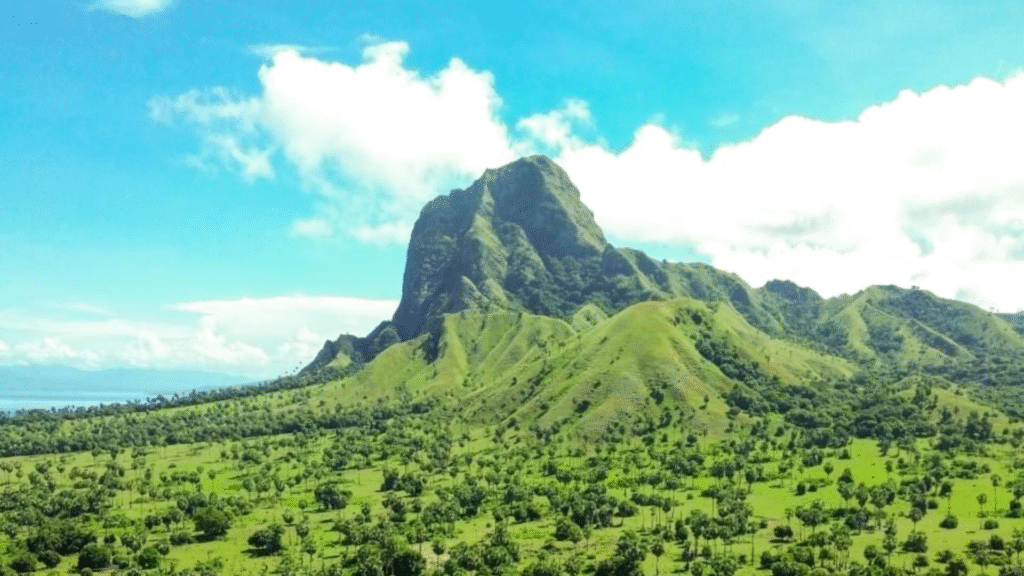
Taman Nasional Komodo offers an incredible setting for travelers who enjoy nature photography. The combination of rugged hills, tropical islands, clear water, wildlife, and traditional boat journeys creates countless opportunities for memorable photographs.
You do not need professional equipment to enjoy photography here. A smartphone can capture beautiful landscapes when you pay attention to light, composition, and timing.
The most important part is to explore patiently. Instead of photographing only the famous attractions, look for small details and different perspectives throughout your journey.
Why Komodo Is Great for Nature Photography
The landscape around Komodo changes constantly as you travel between islands. One moment you may see a quiet beach, while the next reveals a steep hillside surrounded by blue water.
This variety makes Komodo nature photography interesting for both beginners and experienced photographers.
The dry hills create strong textures and patterns, while the sea provides a contrasting background. Boats can also add scale to wide landscape photographs.
Because the environment changes throughout the day, returning to the same location at a different time can produce completely different images.
Photographing Komodo’s Landscapes
Wide landscapes are among the most popular subjects in the national park.
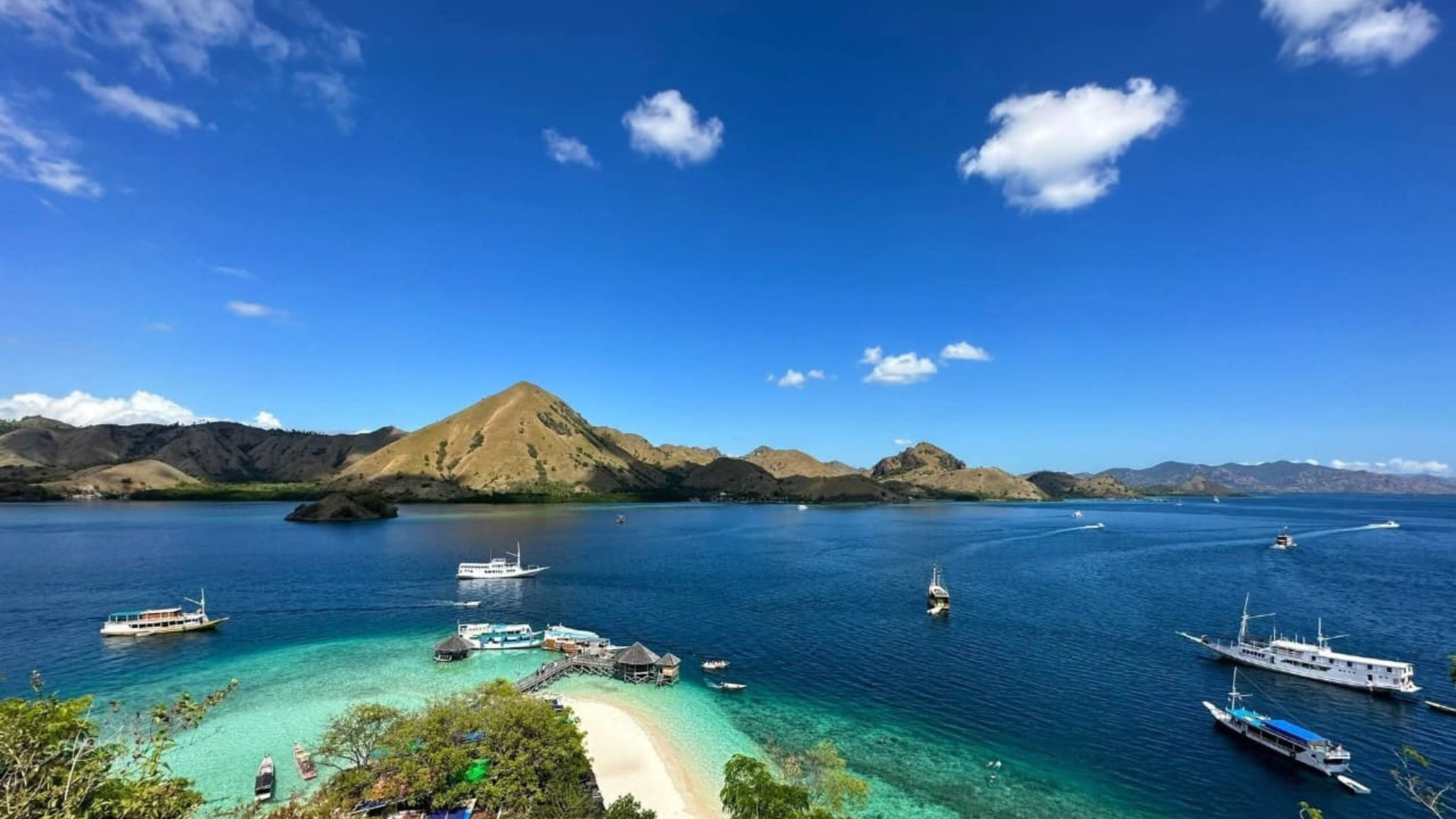
From elevated viewpoints, you can capture islands, beaches, bays, and open ocean in a single frame. Try to include a foreground element to create depth.
A person standing at a safe viewpoint can also help show the scale of the surrounding landscape.
Do not always place the horizon directly in the center. Experiment with compositions that emphasize either the sky, hills, or sea.
A Komodo landscape photography trip becomes more interesting when you experiment instead of taking the same photograph repeatedly.
Capturing the Komodo Dragons
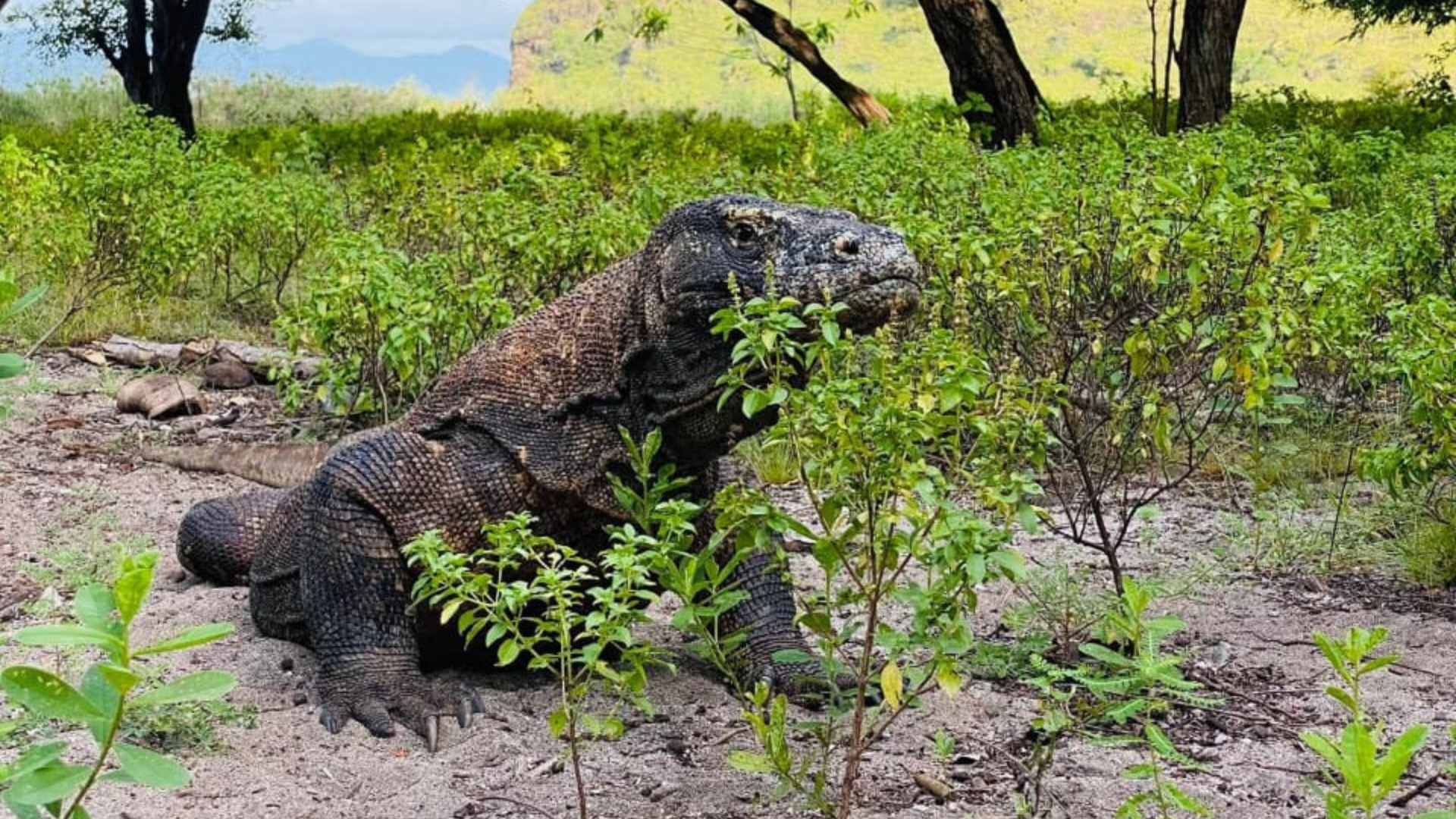
Komodo dragons are fascinating wildlife subjects, but photographing them requires patience and caution.
Always follow the instructions of your ranger or guide. Never move closer to an animal simply to get a better photograph.
Use your camera’s zoom when necessary. A longer focal length can help you capture details while maintaining a safe distance.
Watch the animal’s behavior rather than focusing only on the camera. A natural photograph often comes from observing patiently and waiting for an interesting moment.
Remember that wildlife photography should never disturb the subject.
Beaches and Coastal Photography
Komodo’s beaches provide another set of photography opportunities.
White sand, blue water, rocky hills, and vegetation can create strong contrasts within a single image.
Try photographing the shoreline from different angles. Low perspectives can emphasize patterns in the sand, while higher viewpoints can show the relationship between the beach and surrounding landscape.
Boats near the coastline can also provide a useful focal point.
A Komodo coastal photography experience works particularly well during early morning or late afternoon when sunlight creates softer shadows.
Photographing From the Boat
Many of the best photographs begin during the journey between islands.
Keep your camera ready while traveling because the scenery changes quickly. A boat passing a dramatic coastline or a small island appearing on the horizon can create an excellent spontaneous photograph.
Photographing from the boat also provides opportunities for motion and perspective.
Try capturing the boat’s deck, the wake behind the vessel, or distant islands across the water.
These images help tell the story of your journey rather than showing only individual destinations.
Using Natural Light
Light can completely change the appearance of Komodo’s landscapes.
Early morning often provides soft light and cooler conditions. The low angle of the sun can create longer shadows across hills and beaches.
Late afternoon offers another attractive period for photography. Warm light can add depth to landscapes and create dramatic silhouettes.
During the middle of the day, sunlight can become harsh. If you photograph during this period, look for compositions that use shadows or strong contrasts.
The weather also matters. Clouds can add texture to the sky and create more dramatic landscape photographs.
Golden Hour and Sunset
Golden hour can be one of the most rewarding times for photography.
As the sun gets lower, the landscape can take on warmer tones. Hills become silhouettes, while the sea reflects changing colors.
A Komodo golden hour photography session can produce atmospheric images without requiring complicated techniques.
You can experiment with silhouettes by positioning a person, boat, or hill between the camera and the setting sun.
Protect your eyes and camera equipment when photographing directly toward bright sunlight.
Underwater Photography
Komodo’s marine environment can also provide subjects for photography.
If you use an underwater camera or waterproof housing, you may be able to photograph coral, fish, and other marine life while snorkeling in suitable areas.
Water clarity and sunlight strongly affect underwater images. Clear conditions can produce better visibility, while shallow water often provides more natural light.
Never touch coral or chase marine animals for a photograph.
The best underwater images often come from remaining still and allowing marine life to move naturally around you.
Photography Equipment to Bring
You do not need a large camera bag for a Komodo trip.
A smartphone can work well for landscapes and casual travel photography. If you use a dedicated camera, a wide-angle lens is useful for landscapes, while a telephoto lens can help with wildlife.
Bring spare batteries or a power bank because long days on boats can make charging difficult.
A waterproof bag or protective case is also useful around the sea.
Keep equipment secure during boat transfers and avoid exposing cameras unnecessarily to saltwater.
Respecting Wildlife and Nature
Photography should never come before environmental responsibility.
Stay on designated paths and follow ranger instructions. Do not approach wildlife, feed animals, or disturb nesting areas.
When snorkeling, avoid touching coral and marine animals.
Do not move rocks, plants, shells, or other natural materials simply to improve a composition.
A great photograph should document nature without changing it.
Finding Your Own Perspective
Popular viewpoints can produce beautiful images, but they are not the only places worth photographing.
Look for reflections in water, patterns in dry grass, boats against distant islands, or shadows across a hillside.
Small details can tell a different story about Komodo.
Try changing your position before taking a photograph. Move higher, lower, closer, or farther away when it is safe to do so.
The goal is not to copy photographs you have already seen. Instead, use familiar locations as opportunities to create your own visual interpretation.
Kesimpulan Akhir
Nature photography in Komodo National Park combines adventure with creativity. Landscapes, wildlife, beaches, boats, and marine environments all provide opportunities to create meaningful photographs.
Good photography here depends less on expensive equipment and more on patience, observation, and respect for nature.
Take your time, use natural light, experiment with different perspectives, and always keep a safe distance from wildlife.
The best photographs may come from moments you did not expect, so keep your camera ready throughout the journey.
For travelers planning a photography-focused Komodo and Flores holiday, explore available trips through komodopadartour.com. For Labuan Bajo opportunities involving land, speedboats, house rental or kontrakan, and ruko, visit komodolabuanbajoproperty.com.
 English
  Arabic
  Chinese
  French
  German
  Italian
  Korean
  Russian
  Spanish
  Indonesian