
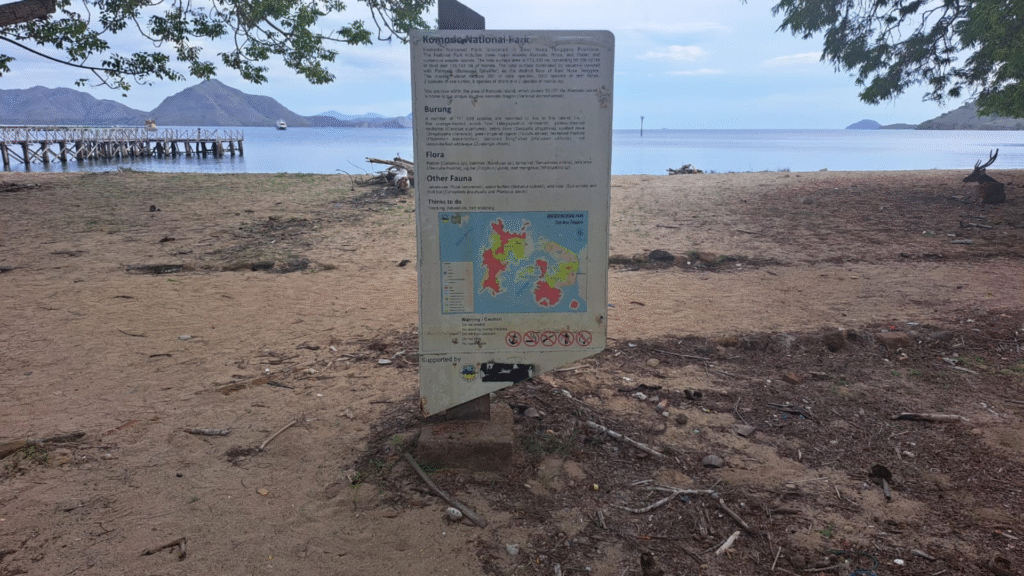
Definition of an Ecosystem
An ecosystem is a complex and unified system formed by interactions between living organisms (flora and fauna) and their physical environment. Within an ecosystem, all components interact with one another and form an integrated whole, playing an essential role in nutrient cycles and energy flow in nature.
Types of Ecosystems in Komodo National Park
Komodo National Park contains a wide variety of ecosystem types, ranging from terrestrial environments to marine waters. These ecosystems support rich and unique biodiversity of flora and fauna.
Mangrove Ecosystem
This ecosystem is dominated by mangrove trees that grow along coastlines and shallow waters. Sediments composed of detritus from decomposing leaves, algae, and roots form the base of a complex food web. Mangrove vegetation helps filter pollution, prevent coastal erosion, and provides critical habitat for small fish, shrimp, mollusks, and many other species.
Tropical Rainforest
The tropical rainforests in the park are found at low elevations, generally below 500 meters above sea level. This forest type is strongly influenced by seasonal conditions and is vulnerable to environmental damage. Tropical rainforests serve as habitats for diverse plant and animal species and play an important role in maintaining local climate balance.
Quasi Cloud Forest Ecosystem
The quasi cloud forest is a type of forest frequently covered by mist or clouds, usually located on hilltops or mountain ridges. This ecosystem develops at higher elevations and supports distinctive vegetation types, contributing significantly to the biodiversity of the area.
Seagrass Ecosystem
Seagrass meadows are marine plant communities that grow in calm, shallow waters. This ecosystem is vital for stabilizing sediments and serves as a habitat for various marine organisms, including fish, shrimp, snails, and other sea creatures. Seagrass beds are also important feeding grounds for turtles and dugongs.
Savanna Ecosystem
Most of the terrestrial area of Komodo National Park consists of vast savannas characterized by tall grasses and scattered trees. This ecosystem supports wildlife such as Timor deer, wild boar, water buffalo, feral horses, and primates like long-tailed macaques. The savanna is also a crucial food source within the Komodo dragon’s food chain.
Deep-Sea Ecosystem
The deep-sea ecosystem includes extremely deep ocean areas beyond the reach of sunlight. This habitat is inhabited by marine organisms that have adapted to high pressure, low temperatures, and minimal light availability.
From pristine seagrass beds to iconic savannas and crystal-clear seas, Komodo National Park offers an unmatched natural experience. Make it yours with exclusive tour packages from Komodopadartour.com. Plan your trip today!

 English
  Arabic
  Chinese
  French
  German
  Italian
  Korean
  Russian
  Spanish
  Indonesian