
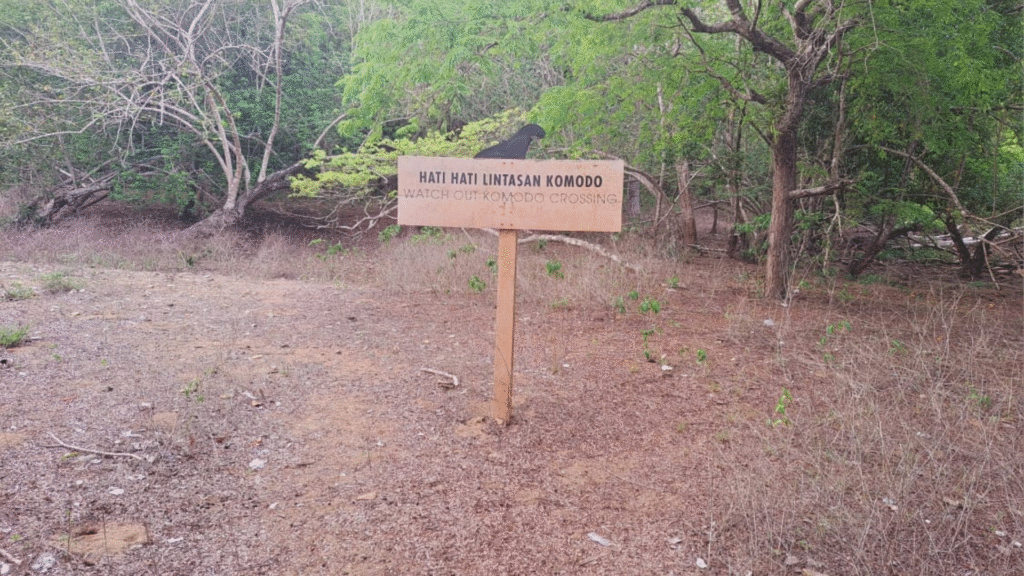
The management of Национальный парк Комодо (KNP) is carried out based on various laws and regulations established by the Government of the Republic of Indonesia. This legal framework serves as the primary guideline for conserving natural resources, regulating the use of the park, and ensuring a balance between conservation efforts and the socio-economic interests of local communities. The following regulations constitute the legal basis for the management of Komodo National Park.
Laws as the Main Legal Foundation
The management of Komodo National Park is grounded in Law of the Republic of Indonesia Number 5 of 1990 concerning the Conservation of Living Natural Resources and Their Ecosystems. This law regulates the principles of protection, preservation, and sustainable use of biological natural resources. In addition, Law Number 41 of 1999 on Forestry provides the legal basis for managing forest areas, including national parks as part of conservation forest zones.
Protection of the park is further strengthened through Law Number 18 of 2013 on the Prevention and Eradication of Forest Destruction, as well as Law Number 32 of 2009 on Environmental Protection and Management, which emphasizes the importance of safeguarding the environment from various forms of degradation.
Government Regulations on Area Management and Nature Tourism
At the level of government regulations, the management of Komodo National Park refers to Government Regulation Number 28 of 2011 on the Management of Nature Reserve Areas and Nature Conservation Areas, as amended by Government Regulation Number 108 of 2015. This regulation governs the comprehensive management of conservation areas.
Furthermore, nature-based tourism activities within Komodo National Park are regulated by Government Regulation Number 36 of 2010 concerning the Operation of Nature Tourism in Wildlife Reserves, National Parks, Grand Forest Parks, and Nature Recreation Parks. Financial aspects related to state revenue are regulated under Government Regulation Number 12 of 2014 on the Types and Tariffs of Non-Tax State Revenue applicable to the Ministry of Forestry.
Ministerial Regulations as Technical Guidelines
For technical implementation in the field, the Ministry of Environment and Forestry has issued several ministerial regulations. Minister of Forestry Regulation Number P.37/Menhut-II/2014 governs the procedures for imposing, collecting, and depositing Non-Tax State Revenue (PNBP) in the field of nature protection and conservation. Meanwhile, Minister of Forestry Regulation Number P.38/Menhut-II/2014 regulates certain activities that are subject to a zero-rupiah tariff within conservation areas.
The organizational structure and working procedures of Komodo National Park management are regulated by Minister of Environment and Forestry Regulation Number P.7/MENLHK/SETJEN/OTL.0/1/2016, which defines the role of National Park Technical Implementation Units. In addition, specific regulations related to the use of technology, such as unmanned aerial vehicles (drones), are stipulated in Minister of Environment and Forestry Regulation Number P.16/MENLHK/SETJEN/KKL.1/2018.
Nature tourism business activities in conservation areas are further clarified through Minister of Environment and Forestry Regulation Number P.8/MENLHK/SETJEN/KUM.1/3/2019, which serves as a guideline for tourism operators to ensure that their activities align with conservation principles.
Other Technical Regulations
As a complementary regulation, Director General of Forest Protection and Nature Conservation Regulation Number 7 of 2011 governs the procedures for entering nature reserve areas, nature conservation areas, and game reserves. This regulation is essential to ensure that all activities within Komodo National Park are conducted in an orderly, safe, and responsible manner.
Заключение
With a strong and comprehensive legal framework in place, the management of Национальный парк Комодо is expected to be effective, sustainable, and equitable. These regulations form a vital foundation for preserving the park’s ecosystems while supporting limited and controlled use for education, research, and nature-based tourism.
“Book your Komodo tour today at Komodopadartour.com.”


 English
  Arabic
  Chinese
  French
  German
  Italian
  Korean
  Russian
  Spanish
  Indonesian