

IL DDDT document of Komodo National Park is an important planning reference that supports the management of visitor flow and sustainable tourism in one of Indonesia’s most iconic conservation areas. It assesses the carrying capacity and visitor capacity of key trekking routes and popular visitor sites to strike a balance between ecological protection and tourism activities within the park.
📌 Background and Purpose
Komodo National Park, home to the endangered Drago di Komodo (Varano di Komodo), has many natural attractions that draw increasing numbers of domestic and international visitors. Between 2008 and 2013, the number of tourists visiting the park rose significantly, highlighting the need to understand how many visitors the park can support without damaging its ecosystems and wildlife habitats.
The DDDT document provides the park management with scientific data and recommendations to help inform policies on visitor limits, zoning, and sustainable infrastructure planning. It helps answer critical questions such as how many visitors per day or year the park can sustain without compromising habitat integrity or visitor experience.
📊 Tourism Carrying Capacity (DDDT) Insights
The DDDT assessment uses multiple metrics such as Real Carrying Capacity (RCC) E Effective Carrying Capacity (ECC) to evaluate different trekking routes and sites within Parco nazionale di Komodo:
- SU Isola di Komodo, one of the main trekking routes Hutan Asam Banu Nggulung was calculated to have a real carrying capacity of 102 visitors per day e un effective carrying capacity of 74 visitors per day. Overall trekking capacity for the island was estimated at 513 visitors per day (about 187,245 visitors per year).
- Isola di Padar was found to support about 37 visitors per day, reflecting the sensitivity and physical limitations of its landscape.
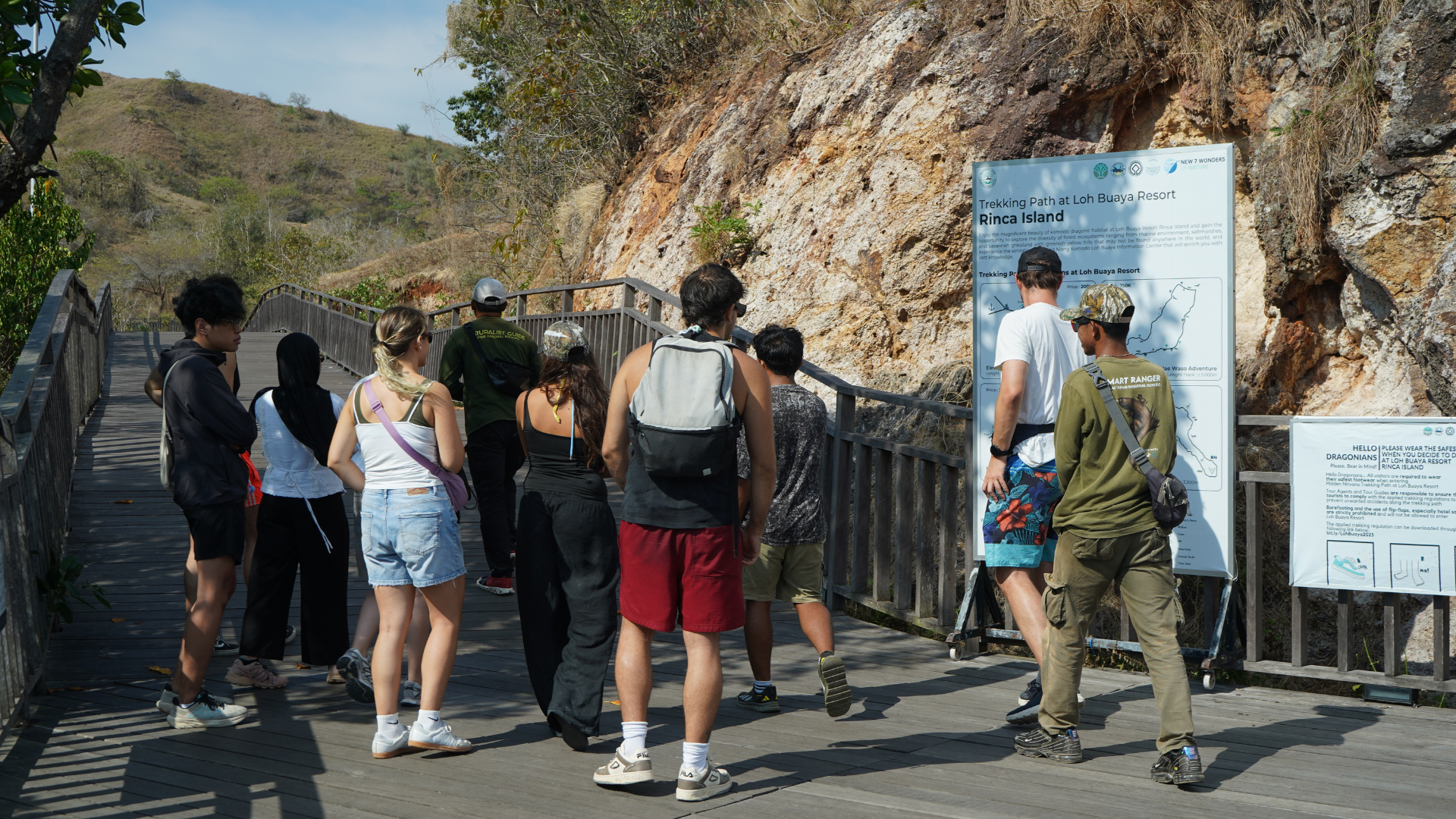
- Isola di Rinca trekking routes had an estimated tourism carrying capacity of 121 visitors per day (equivalent to about 44,165 visitors per year).
These figures help the park authority decide how many visitors can be accommodated without causing degradation of vegetation, disturbance to wildlife, or crowding along trekking paths.
🛠️ Used for Visitor Management Policies
The DDDT document plays a key role in developing policies for visitor management and conservation strategies. For example:
- It has been used as a scientific basis for visitor quotas to protect the park’s ecological values while maintaining a high‑quality visitor experience. In recent policy development, the Indonesian government is planning to limit the number of visitors to Parco nazionale di Komodo to around 1,000 per day, reflecting carrying capacity studies and aiming to mitigate ecosystem degradation.
- Park authorities and stakeholders are working together through digital systems (like the SiOra platform) to manage bookings and ensure that visitor numbers do not exceed capacity limits.
These measures are designed to protect sensitive areas, especially during peak seasons when visitor numbers can easily exceed what the park ecosystem can handle.
“Guarda i draghi di Komodo nel loro habitat naturale, fai escursioni in paesaggi mozzafiato e nuota con le mante: prenota il tuo tour oggi stesso, Contattaci

 English
  Arabic
  Chinese
  French
  German
  Italian
  Korean
  Russian
  Spanish
  Indonesian