
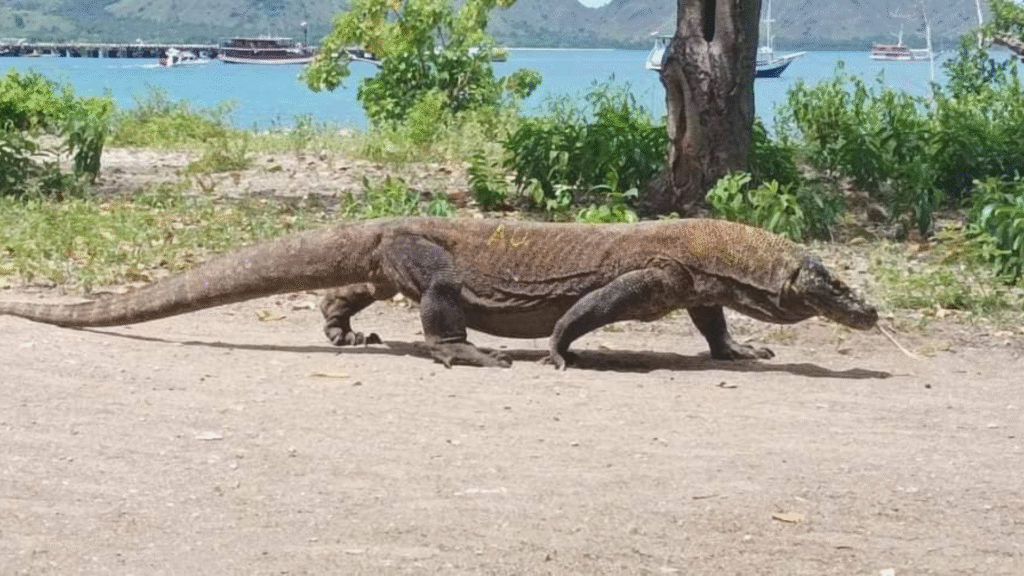
Komodo National Park is not only a globally renowned conservation area for its iconic Draghi di Komodo and spectacular marine biodiversity — it is also home to human settlements that have coexisted with nature for generations. The Village Distribution Map within Komodo National Park shows where people live inside the protected area, highlighting the social and cultural dimensions of conservation in this unique region of Indonesia.
📍 Human Presence in a Protected Landscape
While Komodo National Park is primarily established to protect wildlife and natural habitats, villages and traditional communities continue to exist within its boundaries. These communities play an important role in shaping local culture and livelihood patterns, especially through fishing and small‑scale ecotourism activities.
According to park‑related research, three main villages (four hamlets) are located inside the park area:
- Desa Komodo — located on Isola di Komodo
- Desa Pasir Panjang — on Rinca Island
- Desa Papagarang — on neighboring islands
These villages are inhabited by families who often depend on small‑scale fishing and tourism support services such as guiding, boat operations, and souvenir sales.
🏘️ Community and Livelihood
The people living inside the park area are diverse, comprising a mix of local indigenous groups E migrants from neighbouring regions. Traditionally, many local residents engage in fishing, while others have adapted to serve the growing tourism sector as guides, boat operators, and hospitality workers.
Tourism has increasingly become an economic driver for villagers, encouraging community participation in ecotourism and cultural exchange. However, this growth must be managed carefully to maintain the balance between people’s livelihoods and biodiversity protection.
🧭 Spatial Significance of the Villages
IL village distribution map helps park managers and planners understand how human settlements are spatially related to sensitive ecological zones. Knowing the locations of villages within the park supports better planning, such as:
- Regulating tourism flow to prevent overcrowding near fragile habitats.
- Coordinating community‑based conservation programs that involve local residents as key stakeholders.
- Ensuring that basic services and infrastructure support sustainable living without compromising ecological integrity.
This mapping is part of the broader effort to integrate people‑centered considerations into conservation planning, acknowledging that humans are part of the park’s living landscape.
🌿 Balancing Conservation with Community Life
Villages inside Komodo National Park serve as reminders that conservation and community life can coexist — but with careful planning and participation. By recognizing where people live and how they interact with the environment, park authorities can:
✔ Develop inclusive policies that support both biodiversity conservation E community welfare.
✔ Promote responsible ecotourism that benefits local economies while preserving natural habitats.
✔ Encourage cultural heritage preservation, as these communities maintain traditional knowledge and practices tied to the local environment.
At the same time, external villages and settlements near the park’s borders also play a role in the larger socio‑ecological system, influencing land use and resource management strategies both inside and around the park
🏁 Conclusione
IL Village Distribution Map within Komodo National Park illustrates the spatial reality of human presence inside this world‑famous conservation area. The existence of communities like Desa Komodo, Pasir Panjang, and Papagarang highlights an important principle of modern conservation: protecting ecosystems while supporting the sustainable livelihoods of local people. Understanding how villages are interwoven with natural landscapes enables park authorities to plan more inclusive and effective management strategies — where nature and communities thrive together.
Cerchi un viaggio ben organizzato e indimenticabile? I nostri pacchetti turistici per Komodo sono pensati apposta per te: prenota ora., Contattaci

 English
  Arabic
  Chinese
  French
  German
  Italian
  Korean
  Russian
  Spanish
  Indonesian