
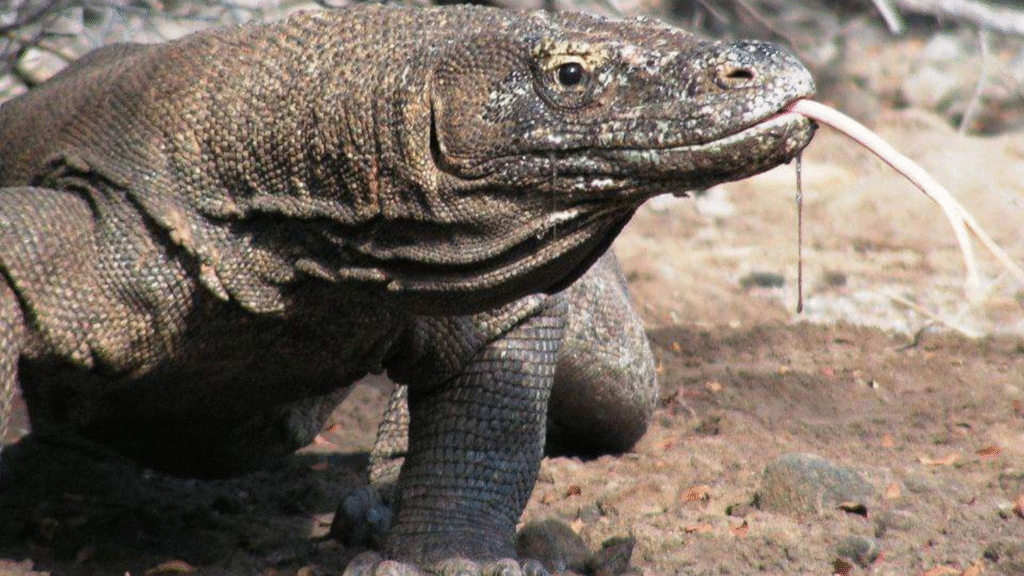
Komodo National Park — home to the world’s largest living lizard, the Komodo (Varanus komodoensis) — has long attracted visitors from around the globe. These apex carnivores are a major draw for tourists eager to see them in the wild, but this popularity has also led to controversial wildlife-feeding practices with complex implications for conservation and local communities.
Tourism and Feeding Practices
In efforts to make dragon sightings more reliable for tourists, park authorities and local stakeholders historically engaged in supplementary feeding — providing goats and other animals at specific sites so dragons would congregate there. This made it easier for visitors, especially those on short itineraries, to see dragons without long or unpredictable excursions.
While feeding boosted visitor satisfaction and made dragon encounters more predictable, it also altered dragon behavior and expectations. Komodo dragons began associating certain locations with easy food rather than hunting naturally, affecting their distribution and visibility elsewhere in the park.
Conservation and Ecological Concerns
Supplementary feeding sparked debate among conservation scientists and park managers. Critics argued that artificial feeding:
- Distorts natural behavior: Regular feeding at fixed sites encourages dragons to become habituated to humans and to concentrate unnaturally in specific areas.
- Affects long-term ecology: Altered movement patterns and density can influence predator–prey dynamics and disrupt normal ecological roles.
- Raises welfare questions: Feeding may benefit tourists in the short term but could undermine the dragons’ ability to forage and hunt naturally.
Because of such concerns, feeding practices were eventually reduced or halted, leading to significant changes: dragon sightings at former feeding sites dropped sharply, and tourists were less guaranteed to observe the animals during visits.
Impact on Local Communities
The practice of feeding dragons also had socioeconomic implications. Local people once earned additional income by supplying goats and providing services tied to feeding events. When feeding ceased, this source of revenue disappeared, affecting livelihoods in some villages that had become economically dependent on tourism-linked goat sales.
This dynamic highlights a key challenge in wildlife tourism: policies that aim to protect ecosystems must also consider community welfare and economic incentives. If local people feel excluded from benefits, support for conservation goals may weaken over time.
Finding a Balance: Sustainable Viewing Strategies
To reconcile tourism appeal with ecological integrity, researchers and park managers have recommended several alternative approaches:
- Non-intrusive wildlife viewing: Developing natural viewing platforms, blinds, or observation points that allow tourists to see dragons without feeding. This reduces human influence while still offering memorable encounters.
- Habitat enhancements: Providing water sources or encouraging natural prey populations near accessible areas so dragons remain nearby without artificial food.
- Tourism training and diversification: Helping local communities engage in varied tourism roles — such as guiding, wildlife education, crafts, and cultural tours — so income does not depend on feeding practices alone.
Kesimpulan
Feeding naga at Komodo National Park, while initially effective as a tourism tool, revealed deeper conservation challenges. It underscores the delicate balance needed between visitor expectations, wildlife welfare, and community benefits. Moving forward, sustainable tourism strategies must prioritize natural behavior, ethical viewing, Dan inclusive economic opportunities to ensure both dragons and local people thrive.
Saksikan komodo di habitat aslinya, jelajahi lanskap yang menakjubkan, dan berenang bersama pari manta — pesan tur Anda hari ini!, Hubungi kami


 English
  Arabic
  Chinese
  French
  German
  Italian
  Korean
  Russian
  Spanish
  Indonesian