
When people think about Komodo, they often imagine the legendary Komodowaran and dramatic island landscapes. However, beyond its natural wonders, Komodo also holds a rich cultural heritage shaped by generations of coastal communities.
The art and culture of Komodo reflect a unique blend of tradition, adaptation, and interaction with the natural environment, making it not only a destination for adventure but also a place of deep cultural significance.
Cultural Diversity in the Komodo Region
The Komodo region, which includes parts of Flores and Sumbawa, is home to diverse communities with different ethnic backgrounds. Over time, migration and modernization have created villages composed of multiple ethnic groups living together.
Traditional lifestyles have gradually changed due to external influences such as television, improved transportation, and tourism. Despite these changes, local traditions continue to survive and evolve within the community.
Traditional Way of Life
Life in Komodo is closely connected to the sea. Most local people work as fishermen, relying heavily on marine resources for their livelihood.
Communities have developed a deep understanding of nature—reading winds, tides, and weather patterns to survive. This connection to the environment has shaped a culture based on balance, respect, and sustainability.
Villages are typically small, with houses built near the shoreline, reflecting the importance of the ocean in daily life.
Local Beliefs and Folklore
One of the most fascinating aspects of Komodo culture is its connection to the Komodo dragon. In local folklore, there is a belief that humans and Komodo dragons share a special relationship, sometimes even described as being born from the same ancestor.
This belief encourages respect toward the animals rather than fear, influencing how local communities interact with wildlife.
Religion in the region is diverse. Many communities are Muslim, while others, especially in Flores, are Christian.
These religious traditions coexist with local beliefs and customs, creating a unique cultural identity.
Traditional Arts and Crafts
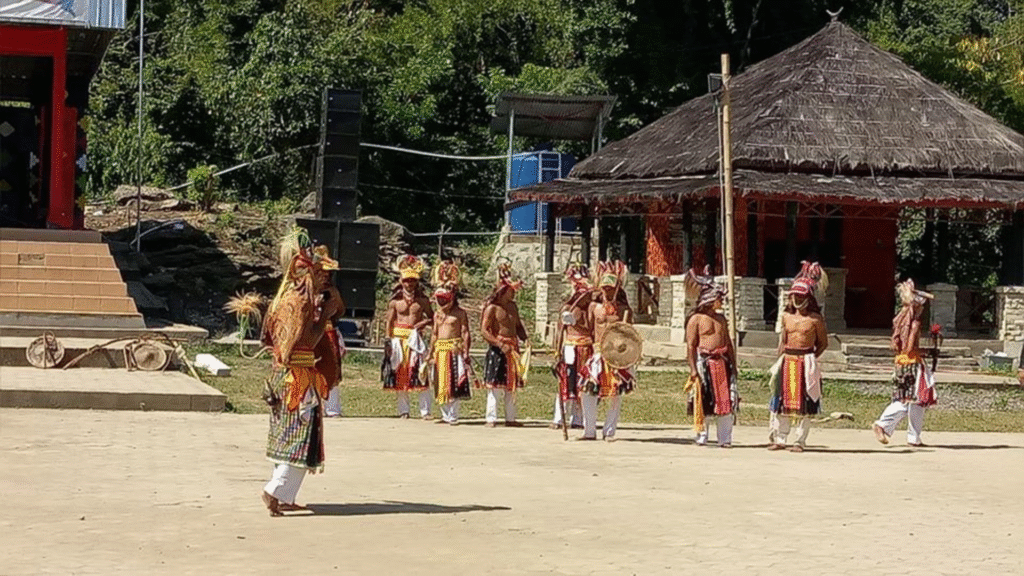
Art in the Komodo region is expressed through traditional crafts and performances. Some of the most notable cultural elements include:
- Ikat weaving – a traditional textile art known for its intricate patterns and symbolic meanings
- Caci dance – a traditional whip dance representing strength, courage, and the balance between good and evil
These art forms are not only decorative but also serve as a way to preserve history, identity, and storytelling within the community.
Influence of Modernization
Like many traditional societies, Komodos cultural landscape has been influenced by modernization. The introduction of media, increased mobility, and tourism has accelerated cultural changes.
While some traditional practices have declined, others have adapted to new conditions. Tourism, in particular, has brought both opportunities and challenges—supporting the local economy while also influencing cultural practices.
Culture and Nature: A Unique Balance
What makes Komodo truly special is the strong connection between culture and nature. Local communities have lived alongside wildlife, including the Komodo dragon, for generations.
This coexistence reflects a philosophy of living in harmony with the environment rather than dominating it. Today, this balance is also supported by conservation efforts within Komodo-Nationalpark, which was established in 1980 and later recognized as a UNESCO World Heritage Site.
Abschluss
The art and culture of Komodo are as captivating as its natural beauty. From traditional weaving and dances to unique beliefs about living alongside Komodo dragons, the region offers a cultural experience unlike any other.
Although modern influences continue to shape the way of life, the spirit of Komodos culture remains rooted in tradition, resilience, and respect for nature.
Besuch Komodo is not just about seeing incredible landscapes—it is also about discovering a living culture that continues to evolve while preserving its identity.
Erleben Sie das Abenteuer Ihres Lebens – buchen Sie jetzt Ihr Komodo-Nationalpark-Reisepaket bei komodopadartour.com

 English
  Arabic
  Chinese
  French
  German
  Italian
  Korean
  Russian
  Spanish
  Indonesian