
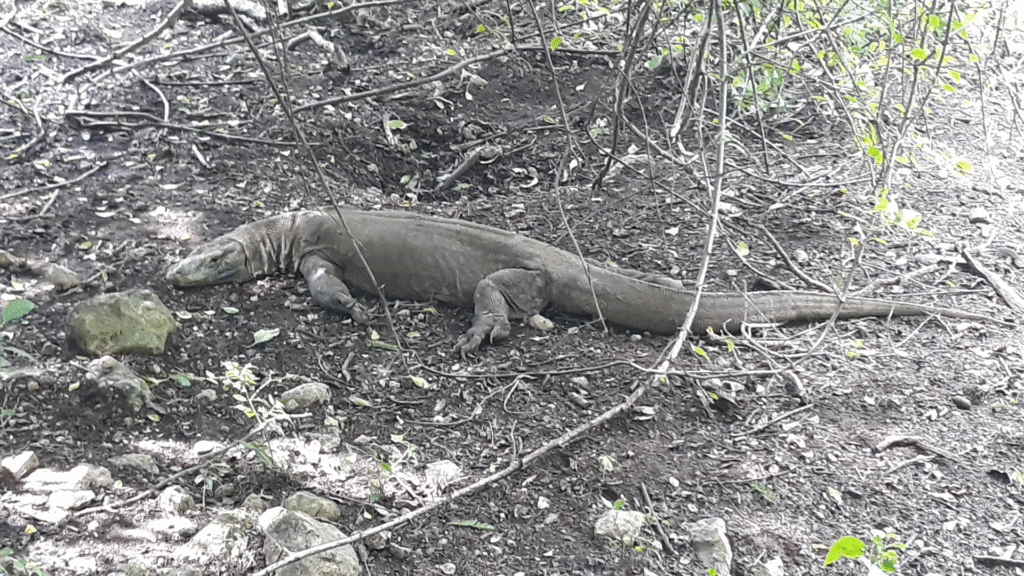
Der Komodowaran is one of the most fascinating creatures on Earth. Native only to a handful of Indonesian islands—including Komodo, Rinca, and Gili Motang—these enormous lizards have lived for millions of years, though they were first documented by Western scientists only in 1910.
Here are seven amazing facts that most people don’t know about these remarkable reptiles:
1. They Inspired King Kong
In 1926, explorer William Douglas Burden led an expedition to capture Komodo dragons alive. He succeeded in bringing two specimens back to the Bronx Zoo in New York, where they became a sensation. Burden’s friend, filmmaker Merian Cooper, used elements of this adventure as inspiration for the classic movie King Kong (1933).
2. Females Can Reproduce Without Males
Komodo dragons are capable of parthenogenesis, a form of asexual reproduction. When a female lays eggs without mating, all hatchlings are male. This unusual trait may help isolated females colonize new islands and establish breeding populations.
3. Short Lifespan in Captivity
While Komodo dragons can live up to about 30 years in the wild, their lifespan in captivity is usually much shorter.
4. Ancient Anatomy: Two Penises
Male monitor lizards—a close relative of the Komodo dragon—have two penises (called hemipenes), and they alternate using them. While Komodo dragons themselves don’t use both at once, this odd trait highlights their evolutionary ties within the monitor lizard family.
5. Cannibalism Is Normal
About 10 % of an adult Komodo dragon’s diet comes from newly hatched dragons. To survive, juvenile dragons often climb into trees, avoiding adult predators that aren’t as adept at climbing.
6. Incredible Sense of Smell
Komodo dragons use their forked tongue to “taste” particles in the air. This extraordinary sensory ability allows them to detect carrion up to 9.5 km (about 6 miles) away—far beyond what most people would expect.
7. They Don’t Seek Out Humans
Contrary to some myths, Komodo dragons generally avoid human contact. Juveniles are shy and will flee from humans at distances of about 100 meters (330 feet), while adults may hold their ground but also prefer to stay away. Only when threatened or cornered will they react defensively, potentially with aggression.
Important reminder: Because Komodo dragons sometimes lie motionless—even when they are alert—tourists can easily get too close for photos. It’s crucial to follow ranger instructions and keep a safe distance at all times
Erleben Sie das Abenteuer Ihres Lebens – buchen Sie jetzt Ihr Komodo-Nationalpark-Reisepaket bei komodopadartour.com




 English
  Arabic
  Chinese
  French
  German
  Italian
  Korean
  Russian
  Spanish
  Indonesian