

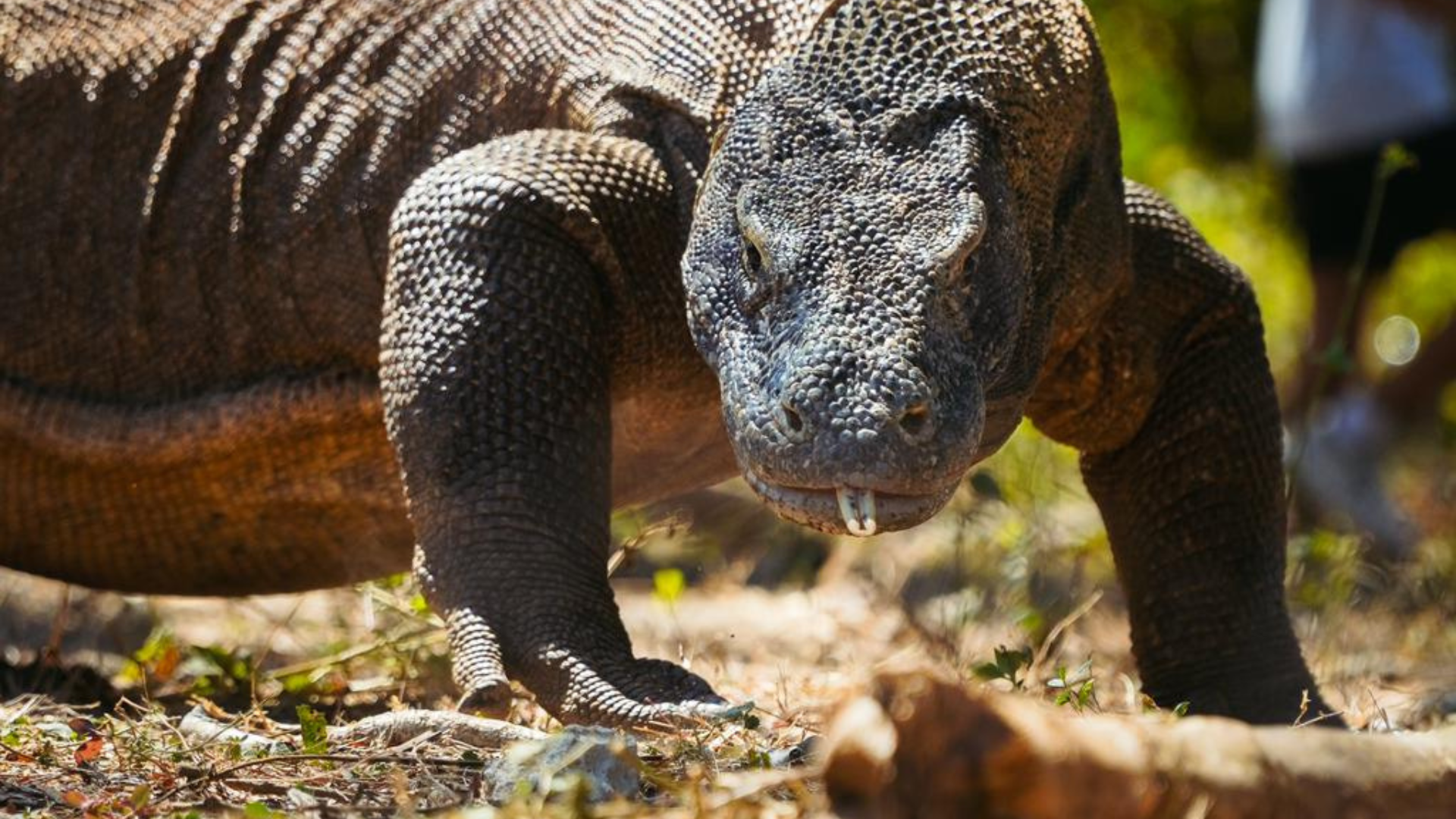
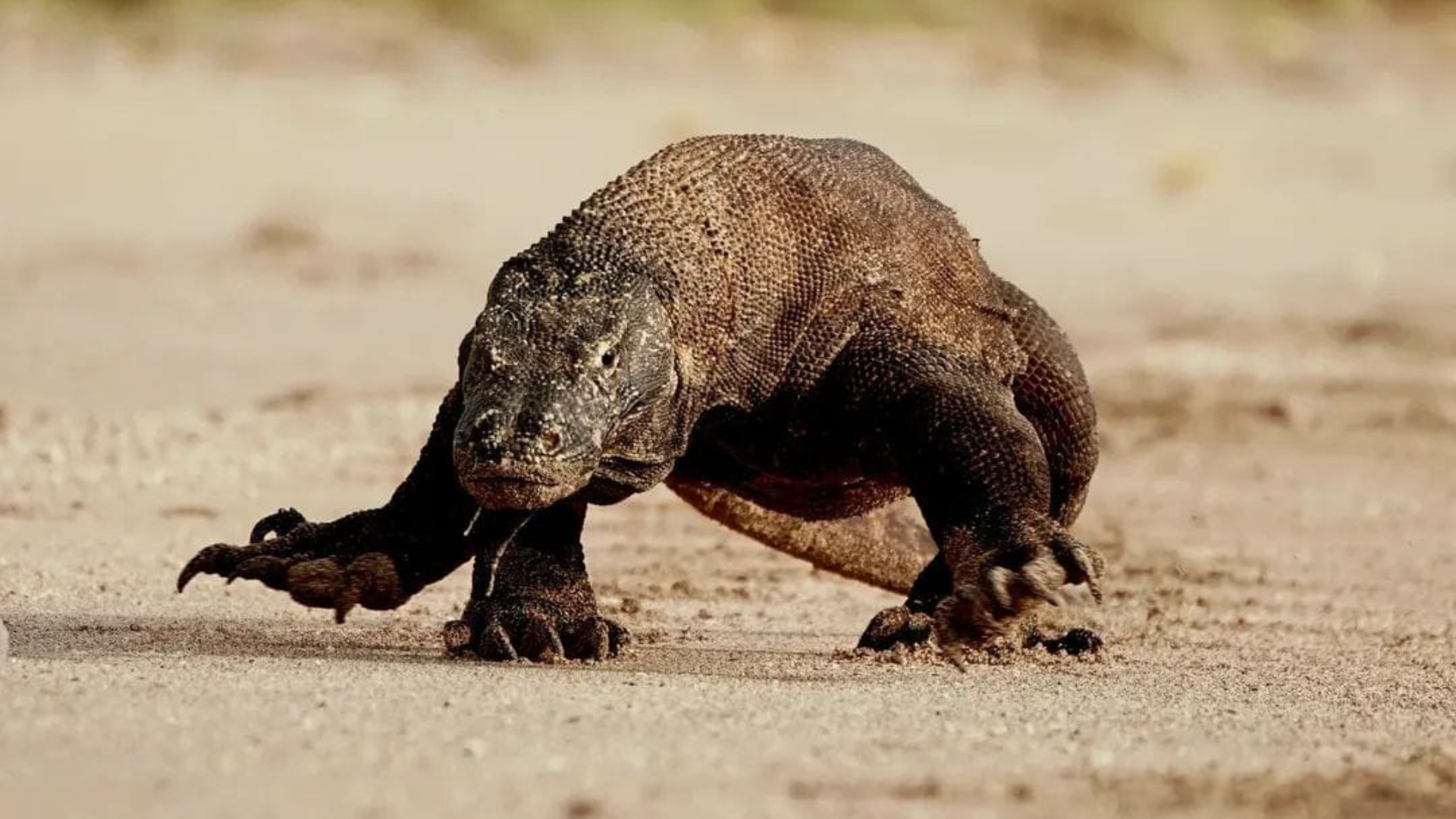
Der Komodowaran (Varanus komodoensis) is one of the most remarkable and iconic animals on Earth — a living symbol of Indonesia’s wild heritage and a major reason travelers visit Komodo-Nationalpark. These giant lizards are awe-inspiring apex predators, unique not only for their size but also for their behavior, ecology, and evolutionary history.
The Giants of the Lizard World
Komodowarane sind die largest living species of lizard in the world. Adults typically reach lengths of 2–3 metres (6.5–10 feet) and can weigh up to around 100 kg (220 lbs) or more. Some exceptionally large individuals can exceed these averages.
These enormous reptiles belong to the Varanidae family of monitor lizards, and they are the top predators in their habitat — with no natural predators once they reach adulthood.
Wo sie leben
Komodowarane sind endemic to Indonesia, meaning they aren’t found naturally anywhere else in the world. Their range is limited to just a handful of islands in Komodo-Nationalpark and nearby regions, including:
- Komodo-Insel
- Insel Rinca
- Gili Motang
- Insel Padar
- Gili Dasami
- Some parts of Flores Island
Because their range is so small and isolated, Komodo dragons are especially vulnerable to environmental change and human impacts.
Population and Conservation Status
Komodowarane are classified as Gefährdet by the International Union for Conservation of Nature (IUCN), reflecting ongoing threats such as habitat loss, climate change, and human encroachment.
According to the latest data from park authorities, there were roughly 3,270–3,396 Komodo dragons observed across their habitat islands in recent surveys — with the largest concentrations on Komodo and Rinca.
Conservation measures in Indonesia aim to protect these iconic reptiles through habitat management, visitor regulation, and ranger-guided tours.
Anatomy and Senses
Komodo dragons possess a powerful physical build adapted to hunting and survival:
- Strong, muscular body: Long, flattened heads and sturdy limbs help them take down large prey.
- Sharp serrated teeth: Ideal for tearing flesh, similar to a shark’s teeth.
- Venomous bite: Recent research shows they have venom glands that inhibit blood clotting, enhancing their effectiveness as predators.
- Highly developed smell: Using their forked tongues and the Jacobson’s organ, they can detect carrion or prey from kilometers away.
- Limited night vision: Their eyesight is better during the day, as they rely more on smell and movement detection.
Behavior and Diet
Komodowarane sind carnivores and apex predators — top of the food chain in their ecosystem. Their diet is varied and includes:
- Deer and wild boar
- Pigs, cattle, and horses
- Smaller Komodo dragons
- Carrion (dead animals)
These lizards are opportunistic feeders and will often ambush or scavenge rather than chase prey over long distances. Thanks to powerful jaw muscles and venom, they can bring down relatively large animals.
Their hunting strategy sometimes involves waiting in ambush, biting their prey forcefully, and then tracking it as the venom and blood loss weaken it.
Reproduction and Life Cycle
Komodo dragons typically reproduce through sexual reproduction, but females are also capable of a remarkable process called parthenogenesis — producing offspring without a male.
Mating usually occurs annually, and females lay clutches of eggs that hatch several months later. Young dragons spend their early months in trees to avoid predation, as adults may even prey on juveniles.
Why They Matter
Komodo dragons are not just biological marvels — they are cultural and ecological icons. As top predators, they help maintain ecological balance in their island ecosystems by controlling prey populations. Their presence also attracts international attention, supporting eco-tourism and conservation efforts in eastern Indonesia.
Sightings of these ancient giants in the wild are a highlight of many Komodo tours, particularly on Komodo- und Rinca-Inseln, where ranger-escorted treks bring visitors into their rugged world.
Abschluss
Der Komodowaran is an extraordinary species — powerful, ancient, and uniquely adapted to its island environment. From its massive size and venomous bite to its role as an apex predator, this remarkable reptile continues to fascinate scientists and travelers alike. Protecting them and their fragile habitat remains a priority for conservationists and local authorities to ensure these “living dragons” endure for generations to come.
Verpassen Sie nicht die Erkundung von Padar Island, Pink Beach, Manta Point und vielem mehr – sichern Sie sich noch heute Ihren Platz!, Kontaktieren Sie uns


 English
  Arabic
  Chinese
  French
  German
  Italian
  Korean
  Russian
  Spanish
  Indonesian