
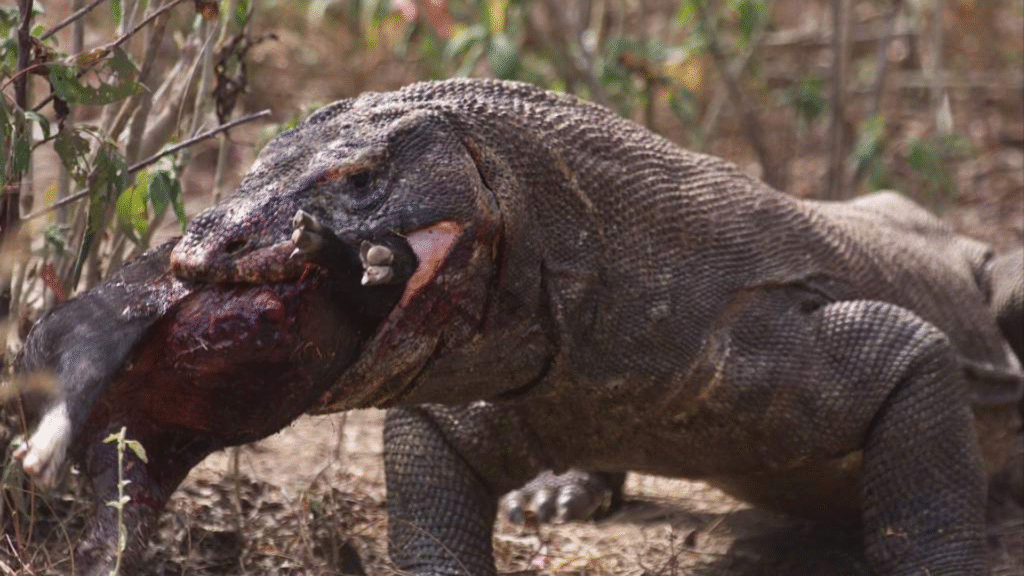
Komodo dragons (Varanus komodoensis) are one of the most fascinating carnivores in the animal kingdom. Found only on a handful of Indonesian islands such as Komodo, Rinca, and Flores, these giant lizards are skilled hunters with unique strategies for tracking and capturing their food.
Understanding how Komodo dragons hunt gives us insight into their behavior, survival tactics, and role as apex predators in their ecosystems. Here’s a closer look at how these remarkable reptiles locate, pursue, and overpower their prey.
What Do Komodo Dragons Eat?
Komodo dragons are versatile predators that feed on a variety of animals. Their primary prey includes medium- to large-sized mammals such as:
- Timor deer
- Wild boar
- Occasionally goats or small cattle
Younger and smaller dragons tend to hunt smaller animals like lizards, rodents, birds, and eggs, while adult Komodos can tackle much larger prey thanks to their powerful bodies and strong jaws.
Komodo dragons are also opportunistic scavengers, meaning they will readily eat carcasses or injured animals when available.
When Are They Most Active Hunters?
Komodo dragons are ectothermic (cold-blooded), so their hunting activity depends heavily on temperature and the time of day. They are most active:
- Early morning: When temperatures are cooler and prey animals begin moving around.
- Late afternoon and early evening: Cooler conditions return, making it easier for the dragons to move quietly and hunt effectively.
During the hottest part of the day, they often rest in shaded areas to conserve energy and avoid overheating.
The Hunting Process: Step by Step
Komodo dragons use a combination of keen senses, patience, stealth, and physical strength to hunt. Their method is strategic rather than purely based on brute force.
1. Detecting Prey from a Distance
Komodo dragons have an excellent sense of smell, which they use to locate prey from far away. They constantly flick their long, forked tongues to collect scent particles in the air. These particles are then analyzed by an organ called the Jacobson’s organ in the roof of their mouth, helping them determine the direction and distance of potential prey. Their eyesight also helps them track movement as they approach.
2. Stalking and Ambushing
Once they’ve detected a target, Komodo dragons approach stealthily, often using natural cover like bushes or rocks to conceal their approach. They calculate the best moment to strike based on the prey’s speed and distance. When the time is right, they launch a sudden and fast ambush, giving the animal little time to react.
3. Delivering a Venomous Bite
When Komodos bite their prey, it’s not always a quick kill. Their bite delivers venom and harmful bacteria into the wound, which helps weaken the prey over time. The venom can disrupt blood clotting and lower blood pressure, while bacteria from the dragon’s mouth can infect the wounded animal. This combination makes the prey weaker as time passes.
After biting, Komodo dragons often follow the injured animal, waiting for it to become too weak to escape. Once the prey is incapacitated, the dragon returns to feed. This strategy helps conserve the dragon’s energy during long hunts.
4. Patience Is Part of the Hunt
Unlike many predators that kill and immediately consume their food, Komodo dragons sometimes wait for their bitten prey to grow weaker. This bite–and–wait strategy is effective in the wild, where chasing fast animals over long distances would be too energetically costly for a large reptile.
Conclusion: A Unique Predator in the Wild
Komodo dragons are not simply brute hunters. Their success as predators depends on sharp senses, stealth, strategy, and patience. By combining keen tracking abilities with powerful bites and a methodical approach to weakening prey, they remain one of the most effective hunters in their ecosystems.
Next time you hear about Komodo dragons, remember they are far more than just large lizards — they are carefully adapted predators shaped by millions of years of evolution.
Experience the adventure of a lifetime — book your Komodo National Park tour package now at komodopadartour.com



 English
  Arabic
  Chinese
  French
  German
  Italian
  Korean
  Russian
  Spanish
  Indonesian