

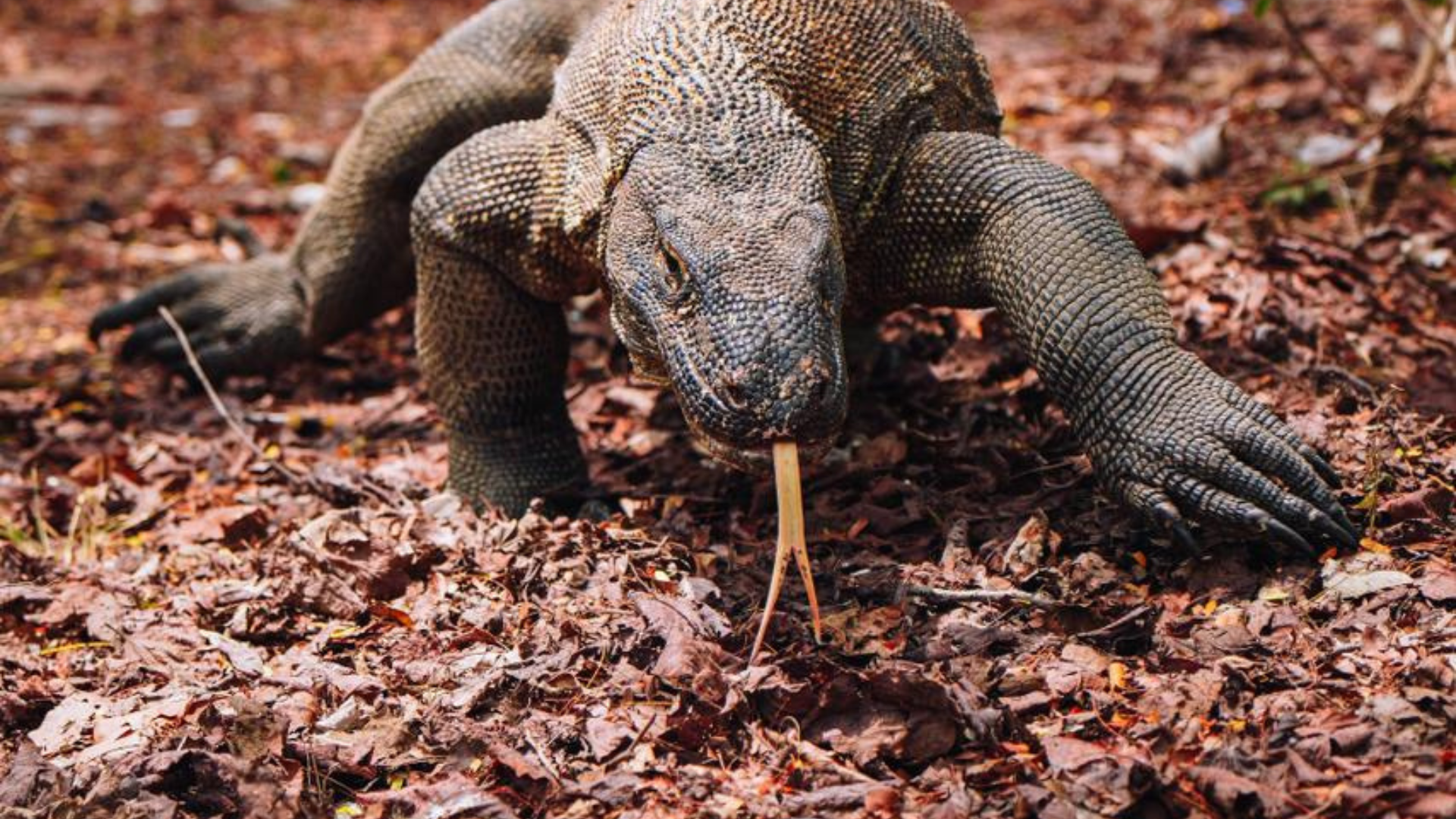
Parc national de Komodo is one of Indonesia’s most iconic conservation areas, globally recognized as the natural habitat of the Dragon de Komodo (Varanus komodoensis), the largest living lizard on Earth. Beyond its role in protecting this legendary species, the park preserves exceptional terrestrial and marine ecosystems that make it a vital natural heritage site of global importance.
Early History and Colonial-Era Management
The history of Komodo National Park dates back to the XIXe siècle, when the area was part of the Sultanate of Bima and later came under the administrative control of the Dutch East Indies Colonial Government, based in Reo, Flores. During this period, governance over the islands laid the foundation for early resource management and territorial oversight.
Global Discovery of the Dragon de Komodo
International attention toward Komodo Island intensified in 1910, when Dutch colonial officer Lieutenant J.K.H. van Steyn van Hensbroek reported the existence of a giant lizard based on local accounts. This report triggered scientific expeditions and widespread curiosity in Europe and beyond. In 1912, zoologist Peter A. Ouwens officially introduced the species to the scientific world under the name Varanus komodoensis. From that moment, the Komodo dragon became a global scientific and cultural phenomenon.
Exploitation and the Rise of Conservation Awareness
Following its global introduction, Komodo dragons faced significant exploitation pressures, particularly for scientific research and zoo collections in Europe and the United States. The Dutch East Indies Government actively facilitated the capture and export of Komodo dragons to meet international demand. However, growing concern over declining populations led colonial authorities to reassess these practices. Eventually, the Dutch government urged the Sultan of Bima and other regional rulers to issue formal protection decrees to safeguard the Komodo dragon and its habitat on Komodo Island.
Key Milestones in Komodo National Park Conservation
The commitment to conservation evolved through several important milestones:
- 1926–1927: Protective regulations were issued by the Sultanate of Bima, the Kingdom of Manggarai, and the Resident of Timor to protect Komodo dragons.
- 1938: Wildlife reserves were established on Rinca and Padar Islands, marking early habitat protection efforts.
- 1965: Komodo Island was officially designated as a wildlife sanctuary.
- 1977: UNESCO recognized the area as a Biosphere Reserve under the Man and the Biosphere Programme.
- 1980: The Indonesian government formally established Parc national de Komodo to protect Komodo dragons and their ecosystems.
- 1991: UNESCO designated the park as a World Natural Heritage Site, acknowledging its outstanding universal value.
- 2013: Komodo National Park was selected as one of the Les 7 nouvelles merveilles de la nature, reinforcing its global significance.
Komodo National Park in the Modern Era
Today, Komodo National Park plays a critical role in multiple areas:
1. Species Conservation
The park protects not only Komodo dragons but also numerous endemic mammals, birds, reptiles, and plant species influenced by both Asian and Australasian biogeographical zones.
2. Exceptional Marine Biodiversity
Its marine territory lies within the Triangle de Corail, one of the world’s richest marine biodiversity regions, supporting hundreds of coral species and thousands of fish species.
3. Scientific Research and Environmental Education
Komodo National Park serves as a living laboratory for studies on evolution, ecology, climate change, and conservation management.
4. Sustainable Ecotourism
As a premier ecotourism destination, the park attracts visitors through trekking, snorkeling, and diving while supporting local communities and promoting responsible tourism practices.
Conclusion
The long and well-documented history of Komodo National Park—from early colonial governance to global conservation recognition—demonstrates Indonesia’s enduring commitment to protecting its natural heritage. Today, the park stands not only as a world-class tourist destination but also as a powerful symbol of successful conservation and sustainable management.
Plan Your Journey to Komodo National Park
Inspired by the remarkable history and natural wonders of Komodo National Park? There is no better way to experience this UNESCO World Heritage Site than by exploring it firsthand.
Discover Komodo dragons in their natural habitat, hike to the iconic Padar Island viewpoint, enjoy world-class snorkeling and diving, and sail through breathtaking island landscapes with a trusted local operator.
👉 Book your Komodo National Park tour today at Komodopadartour.com
Komodopadartour.com offers a wide range of forfaits touristiques de Komodo, from one-day trips to multi-day liveaboard experiences, designed for comfort, safety, and unforgettable memories. Whether you are a solo traveler, a couple, or a group, you can find the perfect itinerary to explore Komodo National Park responsibly and sustainably.
Start your adventure now and experience the legendary Komodo National Park with Komodopadartour.com.



 English
  Arabic
  Chinese
  French
  German
  Italian
  Korean
  Russian
  Spanish
  Indonesian